The pace of technology is staggering. What seemed like science fiction yesterday—AI assistants, connected homes, blockchain currencies—are real today. But the big question is: what’s coming next?
At MetaTech Ltd, we keep our eyes on the horizon so you don’t have to. Here are the 10 most powerful technology trends that will shape the future of business, work, and everyday life.
1. Artificial Intelligence (AI) Everywhere 🤖
AI is no longer a futuristic buzzword. It’s at the heart of modern innovation. From Netflix recommending shows to hospitals predicting patient risks, AI is powering smarter systems.
- Current impact: Customer service chatbots, predictive analytics in finance, personalized e-commerce recommendations.
- Business use case: Small businesses can automate routine tasks (emails, support tickets) and large enterprises can analyze millions of data points instantly.
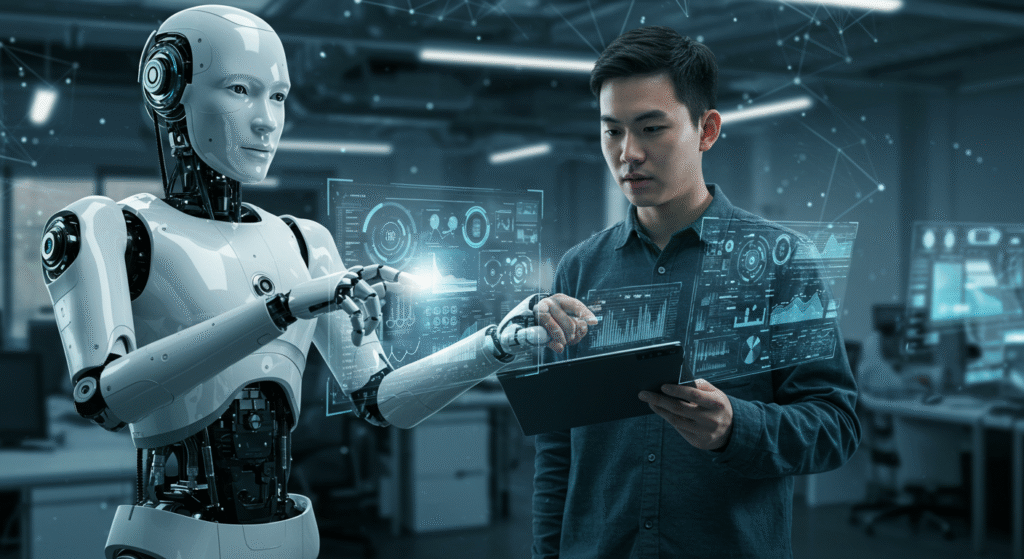
- Future outlook: AI won’t just assist—it will collaborate. Expect “AI colleagues” in the workplace that help you brainstorm, plan, and even create.
💡 Example: Doctors using AI-driven imaging tools to detect cancer years earlier than traditional scans.
2. Cloud Computing & Hybrid Solutions ☁️
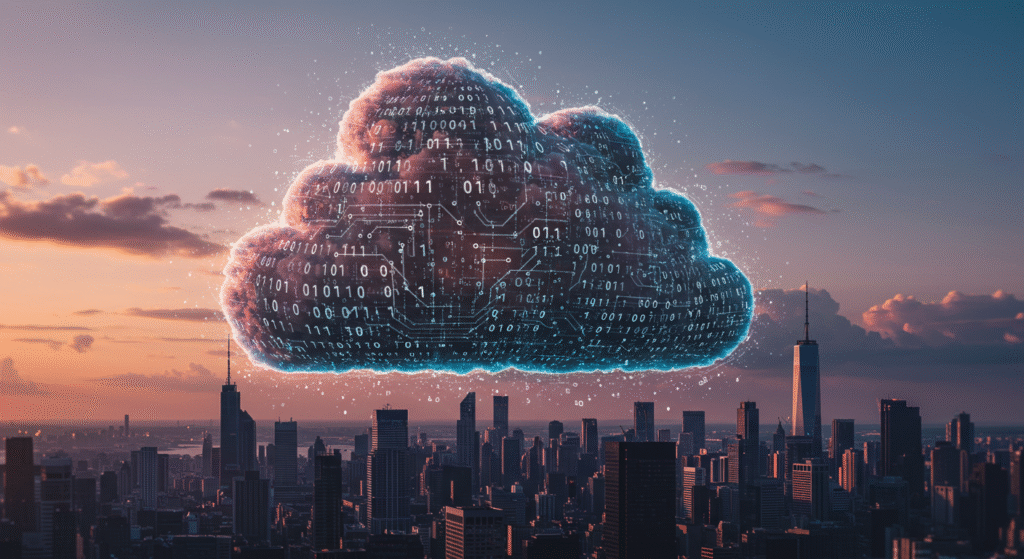
The cloud has become the backbone of digital business. Instead of relying on local servers, companies now use the cloud to store, access, and share data anywhere.
- Current impact: Remote work during the pandemic was possible because of cloud collaboration platforms like Zoom, Teams, and Google Workspace.
- Business use case: Startups reduce infrastructure costs by paying only for the resources they use. Enterprises scale up instantly during peak demand.
- Future outlook: Hybrid cloud (a mix of private and public) will dominate, giving businesses more flexibility, security, and efficiency.
💡 Example: Netflix runs its global streaming service on cloud servers, serving millions of people worldwide without crashing.

3. Cybersecurity Powered by AI 🔐
Every innovation opens a door for hackers. Cyberattacks now cost the global economy over $10 trillion annually. Traditional defenses aren’t enough anymore—that’s where AI cybersecurity comes in.
- Current impact: AI systems detect anomalies faster than human teams. For example, banks use AI to spot fraud in real time.
- Business use case: Companies can protect customer data, ensure compliance, and maintain brand trust.
- Future outlook: Cybersecurity will evolve into “cyber resilience,” where businesses assume attacks will happen but respond instantly.
💡 Example: Microsoft and Google use AI to automatically patch vulnerabilities before hackers exploit them.
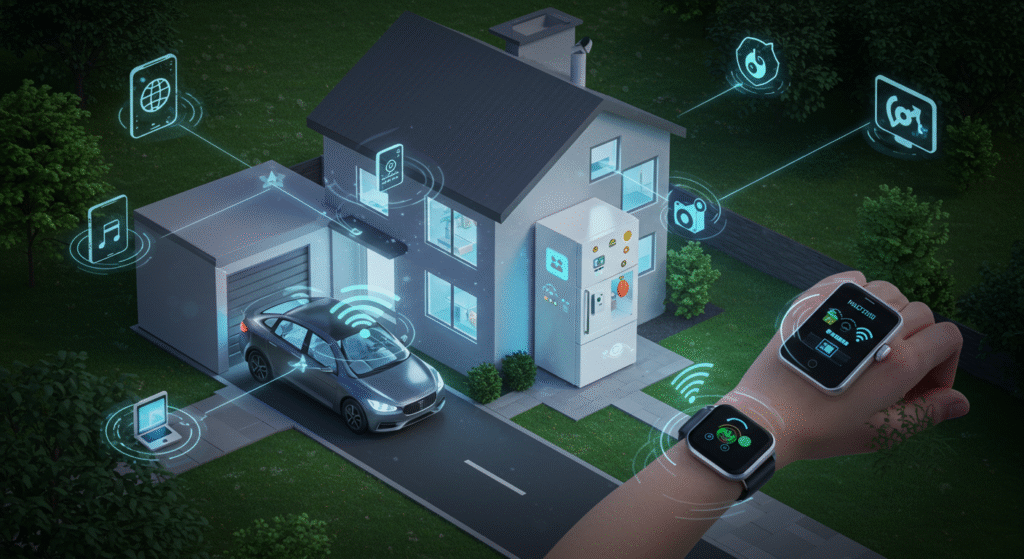
4. Internet of Things (IoT) 🌐
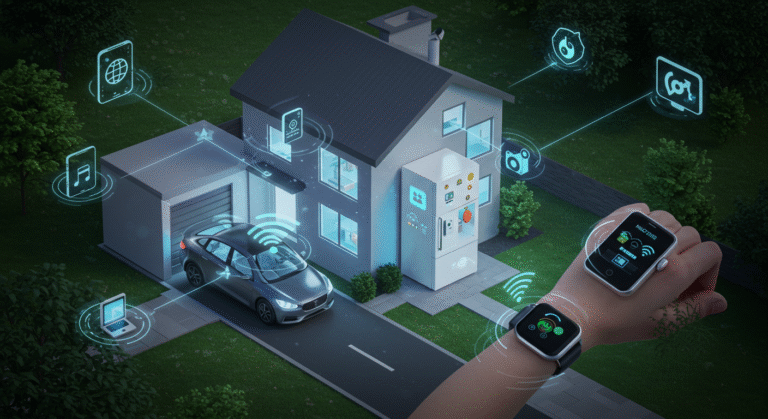
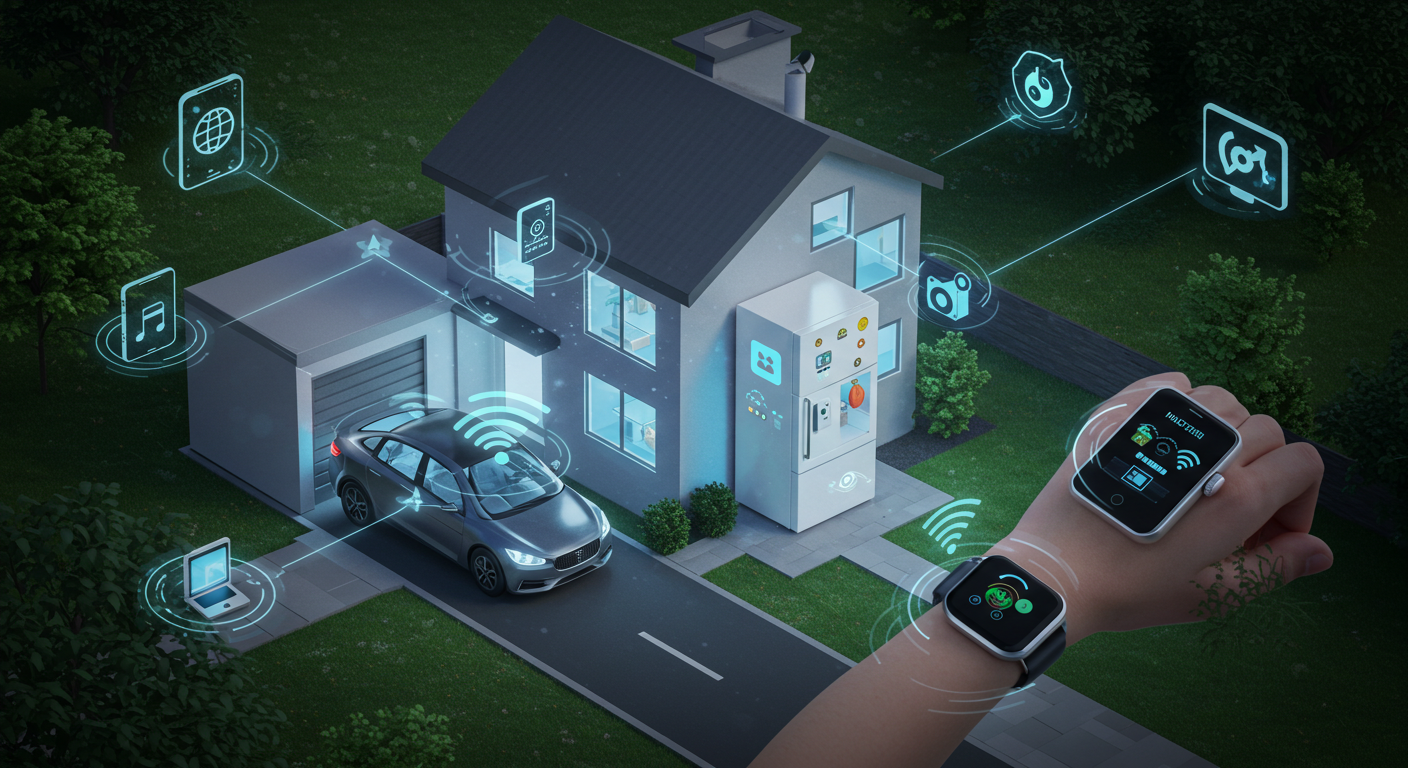
IoT connects everyday devices—cars, homes, even entire cities—into a “smart ecosystem.”
- Current impact: Smart thermostats save energy, smartwatches track health, factories use IoT sensors to improve efficiency.
- Business use case: Logistics companies track packages in real time, reducing lost shipments. Farmers use IoT sensors to monitor soil health and crop growth.
- Future outlook: IoT will enable “smart cities” with connected traffic systems, energy grids, and healthcare networks.
💡 Example: Barcelona saves millions yearly by using IoT-enabled streetlights and water systems.
5. 5G and the Future of Connectivity 📡
5G isn’t just “faster internet.” It’s the foundation for next-generation innovations.
- Current impact: Video calls, AR games, and real-time streaming work seamlessly in 5G zones.
- Business use case: Factories use 5G to connect machines without delays. Doctors can perform remote surgeries with real-time precision.
- Future outlook: Entire industries—healthcare, transport, education—will transform as 5G becomes the standard.
💡 Example: In South Korea, 5G-enabled drones deliver medical supplies to remote areas.


6. Blockchain Beyond Crypto ⛓️
Blockchain is often mistaken as “just Bitcoin.” But its real power is in secure, transparent record-keeping.
- Current impact: Supply chains use blockchain to track goods, proving authenticity. Banks use it for faster cross-border payments.
- Business use case: Businesses can reduce fraud, automate contracts (smart contracts), and guarantee transparency.
- Future outlook: Blockchain could reshape voting systems, healthcare records, and even property ownership.
💡 Example: Walmart uses blockchain to trace contaminated food in seconds, improving food safety.
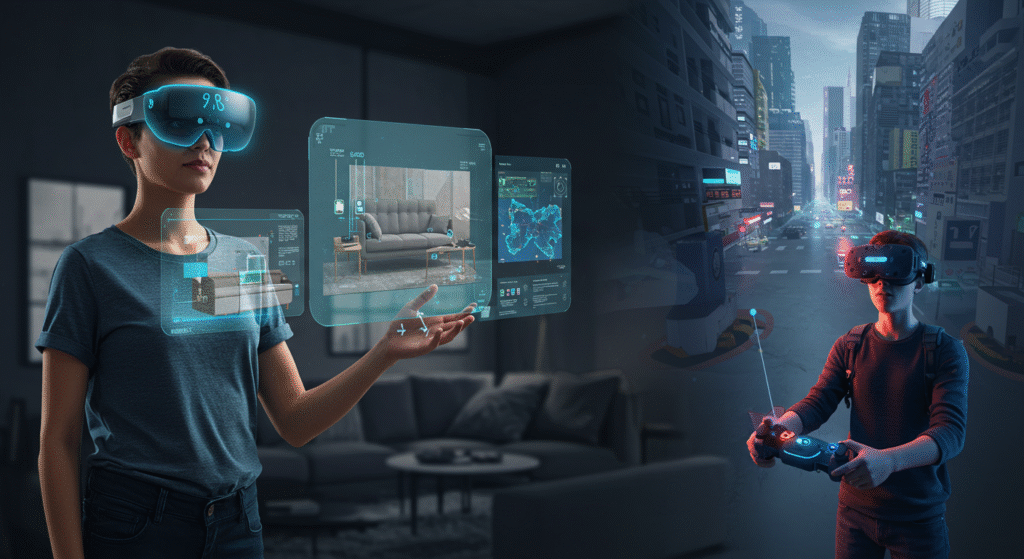
7. Extended Reality (XR): AR & VR 🎮
AR (augmented reality) and VR (virtual reality) are blending the digital and physical worlds.
- Current impact: Gamers immerse themselves in virtual worlds, IKEA lets customers see furniture in their homes before buying.
- Business use case: Real estate agents give virtual property tours, surgeons practice complex operations in VR simulations.
- Future outlook: XR will redefine remote work and education. Imagine sitting in a “virtual classroom” that feels real.
💡 Example: Microsoft’s HoloLens helps engineers visualize and repair complex machinery using AR overlays.

8. Quantum Computing ⚛️
Quantum computing is still young, but it’s the most powerful leap in computing we’ve ever seen.
- Current impact: Companies like IBM and Google are experimenting with quantum prototypes.
- Business use case: Pharmaceutical firms use quantum computing to simulate molecules and discover drugs faster.
- Future outlook: Breakthroughs in finance, climate modeling, and AI could be possible within a decade.
💡 Example: Volkswagen uses quantum computing to improve urban traffic flow.
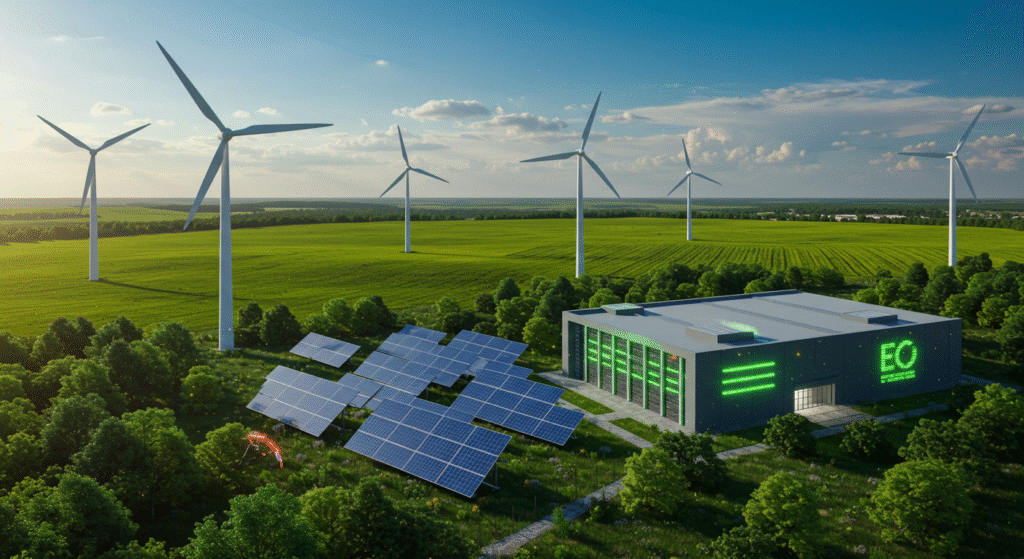
9. Green Tech & Sustainable Innovation 🌱
Tech isn’t just about progress—it’s about sustainability. Green technology focuses on reducing carbon footprints and conserving resources.
- Current impact: Data centers powered by renewable energy, eco-friendly packaging, electric vehicles.
- Business use case: Companies using sustainable practices attract eco-conscious customers and reduce long-term costs.
- Future outlook: Smart grids, sustainable AI, and carbon-neutral supply chains will become the business standard.
💡 Example: Google runs all of its global operations on renewable energy.

10. Human–Tech Collaboration 🧑💻🤝🤖
The future isn’t humans vs. machines—it’s humans with machines.
- Current impact: Employees use AI to handle repetitive tasks while focusing on strategy and creativity.
- Business use case: Customer service reps handle complex issues while chatbots manage FAQs. Marketers brainstorm while AI generates insights.
- Future outlook: Jobs won’t vanish—they’ll evolve. Skills like creativity, empathy, and problem-solving will be more valuable than ever.
💡 Example: In design studios, AI creates multiple prototypes in minutes, while humans refine the best one.

🚀 Final Thoughts
The world is heading into a future where innovation meets responsibility. Businesses that adapt to these trends will not just survive—they’ll thrive.
At MetaTech Ltd, we help organizations embrace these technologies responsibly—through IT solutions, cloud services, software development, and AI innovations.
👉 Want to stay ahead of the curve? Join our mailing list for exclusive insights, guides, and updates from the world of technology.